International money transfer
Make international payments the way they should be
With GoDutch, you can make international payments and easily send money all over the world. You choose the currency, from euros to dollars and pounds, and we ensure fast and secure processing.
Send money to more than 160 countries
Send money to over 160 countries. From local payments to international transfers.
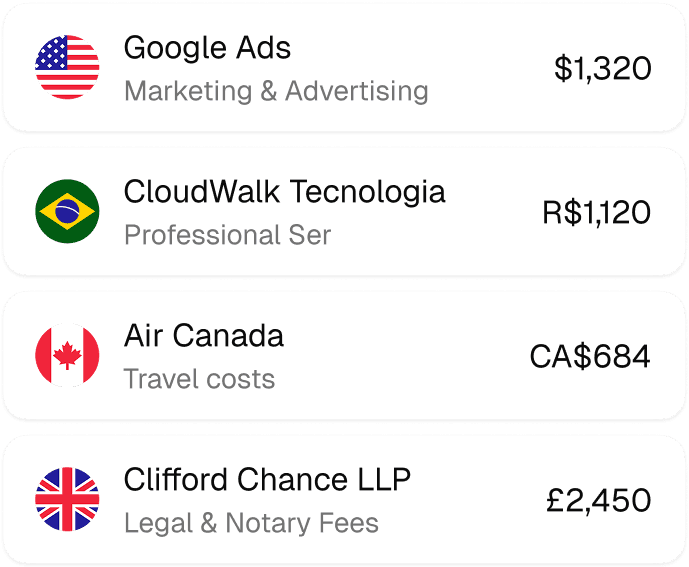
Secure payment with all major networks
SEPA, SWIFT, ACH and Fedwire. Transfer money abroad safely, quickly and without any hassle.

24/7 support
We are available 24/7 to provide personal support, no bots, just people who really help you.


Transfer money safely abroad, worldwide


1. Enter amount and currency
Open a free GoDutch account in a few minutes and get immediate access to your dashboard.

2. Choose your recipient
Enter the recipient’s information, which we verify for accuracy.

3. Approved transaction
Confirm the exchange rate, fees and transaction in the app.
For daily business
Everything you need to pay and manage internationally
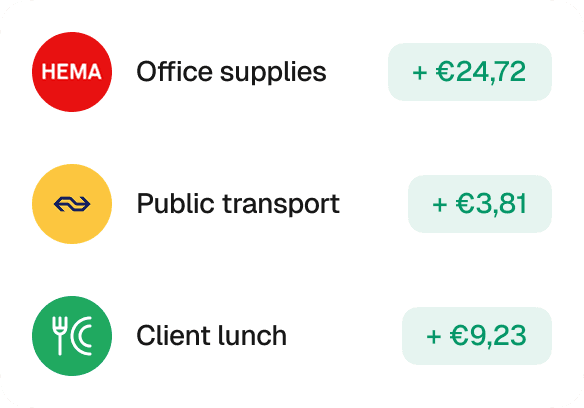
Eliminate manual work and save your team hours every week.


What is the difference between transferring money within and outside SEPA?
The difference between transferring money within and outside SEPA lies in the route the payment takes. Within the SEPA area, a transfer in euros works just like a domestic payment from the account for your business.
The SEPA area covers all EU countries and a number of countries around them, such as Norway, Switzerland and the United Kingdom. Outside the SEPA area, or if you pay in another currency, the payment runs through a different network, such as SWIFT.
The money then often passes through one or more parties on its way to the recipient, and is exchanged into another currency. That difference in route determines how long a payment takes, what it costs and which details you need.
How long does it take to transfer money abroad?
GoDutch processes money transfers abroad within 3 hours at most. When the amount then reaches the recipient depends on the route of the payment.
Within the SEPA area, a transfer in euros reaches the recipient by the next working day at the latest, and an instant transfer within a few seconds, if the receiving party supports it. Outside the SEPA area it can take longer for these reasons:
Intermediary banks: a SWIFT payment often passes through one to three parties on the way, each with its own processing time.
Weekends, public holidays and time zones: a payment that leaves on a Friday afternoon for the US or Asia is only processed there on the next working day.
The receiving party: it decides for itself when the amount lands in your supplier's account.
Extra checks: with large or unusual amounts, a party along the way may check the payment first.
Incomplete details: a missing BIC or an incorrect address holds up the payment until it has been corrected.
What does it cost to transfer money abroad?
At GoDutch, transferring money abroad costs €0.12 per transfer in euros within the SEPA area, and you exchange currencies at mid-market rates at cost; for payments outside it, you see the costs upfront in the app. On top of that, there may be costs that do not lie with GoDutch:
Intermediary bank charges: with payments via SWIFT, a party along the way may deduct part of the amount.
Charges of the receiving party: your supplier's bank may charge for receiving or converting the amount.
The further outside Europe and the less common the currency, the heavier those items weigh. If you compare providers, look not only at the fee per transfer, but also at the rate you get compared with the mid-market rate at that moment.
Why does less arrive with an international payment?
With an international payment, less arrives if the charges of intermediary banks or the receiving party are deducted from the amount.
Who pays those charges is set by the charge option on the payment: with OUR the sender pays all charges, with SHA each pays the charges of their own party, and with BEN the recipient pays everything.
Within the EU, sharing (SHA) is the legal rule. If you pay a supplier outside Europe and the full invoice amount has to arrive, OUR is the option that ensures they receive no less than what is on the invoice.
Do you transfer money in euros or in the recipient's currency?
You transfer money in the currency stated on the invoice. If you pay in euros outside the eurozone, the recipient's party converts the amount at its own rate. Your supplier then only knows afterwards exactly what comes in, and the exchange rate difference ends up with them.
If you pay in the local currency, you see the rate upfront and the invoice amount arrives exactly. If the invoice is in euros, the supplier has already chosen to take on the exchange rate risk themselves and you simply pay in euros.
How much money can you transfer abroad?
There is no legal maximum for transferring money abroad in the Netherlands. Each provider does set its own limits, per payment, per day or per month, and these differ per provider and sometimes per plan. So check your limit beforehand if you want to transfer a large amount.
With large or unusual amounts, your provider may ask for an explanation, for example about the purpose of the payment or the origin of the money. Under European anti-money laundering rules, financial institutions are required to check unusual transactions.
If you are going to transfer a large amount, for example for a machine or a large stock purchase, keep the invoice or agreement to hand.
What do you check before sending an international payment?
Before you send an international payment, you mainly check the recipient's details, because that is where most delays arise.
Since October 2025, for transfers in euros within the eurozone, your provider is required to check whether the name and IBAN match; for payments outside it or in another currency, this does not happen. These five points stop a payment from getting stuck or coming back:
Name and account details: check the recipient's full name and address and the IBAN or account number, preferably against details you already had from the supplier.
BIC or SWIFT code: you need it outside the SEPA area; without the right code the payment cannot be processed automatically.
Currency: pay in the currency of the invoice, so the amount arrives exactly.
Charge option: choose OUR if the full amount has to arrive and SHA if you share the charges.
Description: put the invoice number in the description, so your supplier can match the payment straight away.
Why do international payments belong in your accounts?
International payments belong in your accounts, because an invoice in dollars or pounds has to be booked just like an invoice in euros. If that payment runs through a separate service next to your account, your transactions are in two places and your bookkeeper has to piece them together.
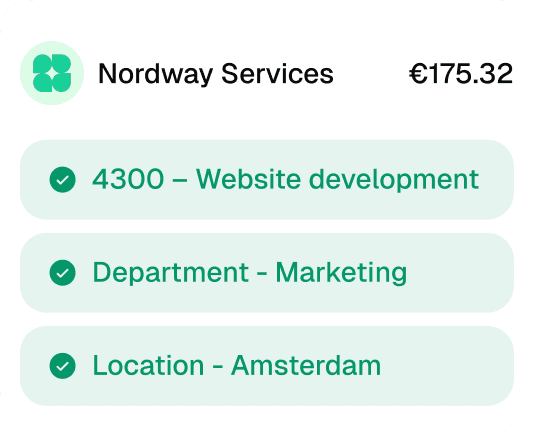
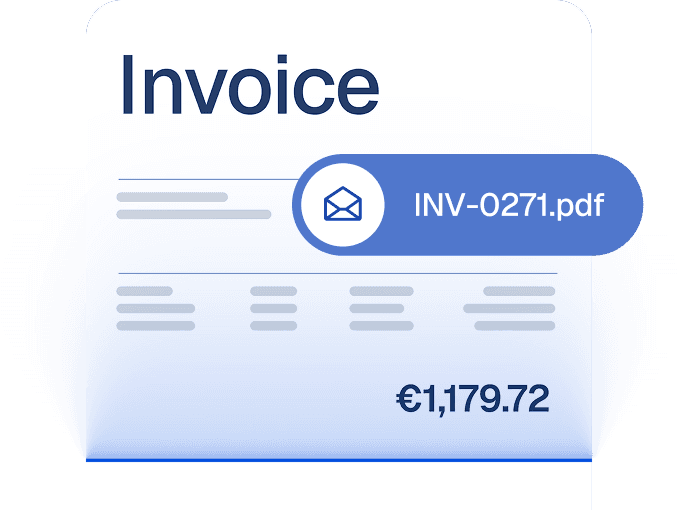
At GoDutch, international payments are in the same app as your everyday account and your cards, and they flow into your accounts through the integration with your accounting software. You notice that the first time you pay a supplier in a foreign currency: the payment, the rate and the invoice are together, without you having to retype anything.
FAQ
Frequently asked questions about international payments
Discover answers to frequently asked questions about sending money abroad.