
As a VOF owner, you don’t want to wait
GoDutch helps you not only pay and receive but also ensures that your financial matters are automatically in order. Without extra tools. Without extra work.
Business account for a general partnership within 1 day
Open a business account for your general partnership in 3 minutes, and send and receive payments within 1 day.
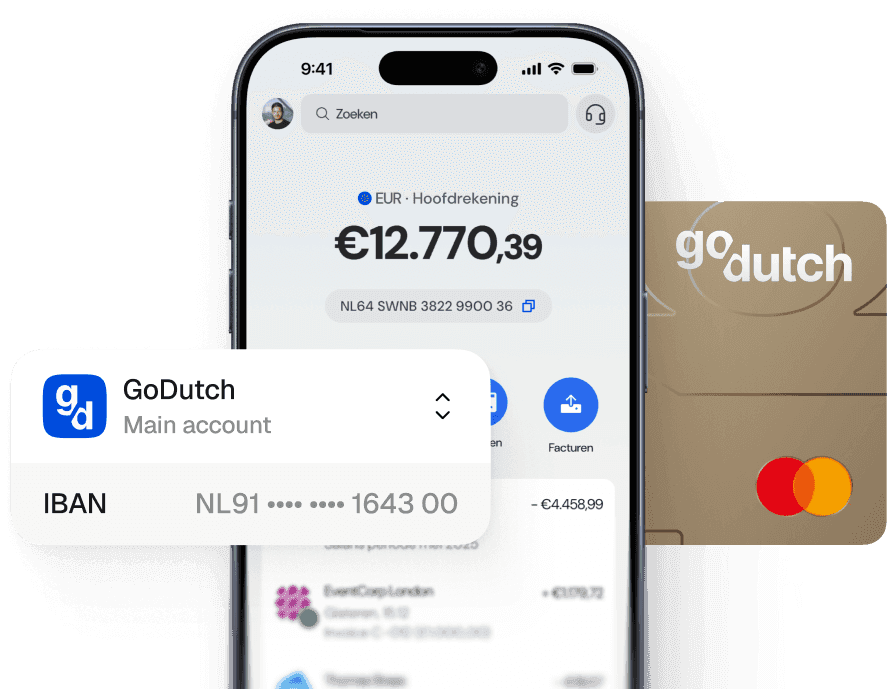
Let your account do the work
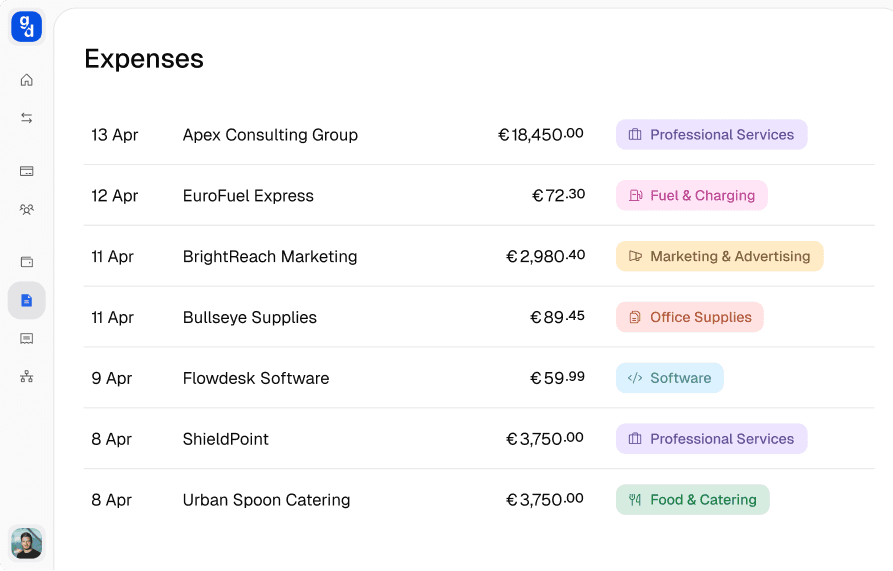
GoDutch automates your financial administration, from incoming invoices to expense management. You focus on doing business, we take care of the rest.
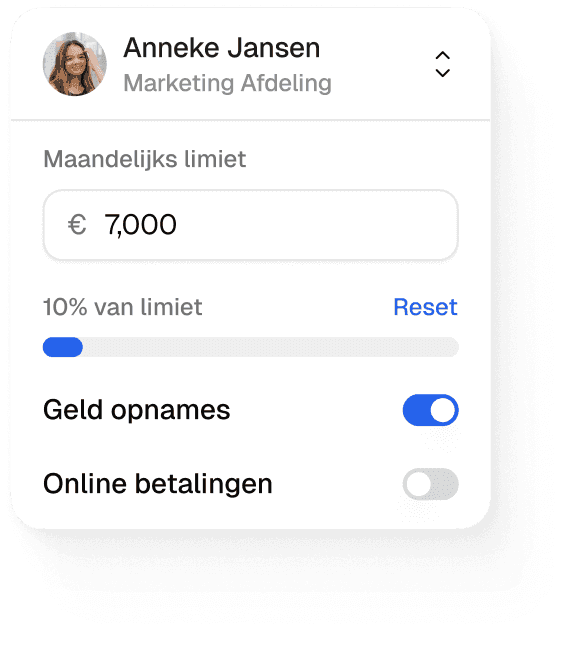
Team roles and cards
Issue cards to your colleagues and keep control of spending, without the hassle of expense claims.
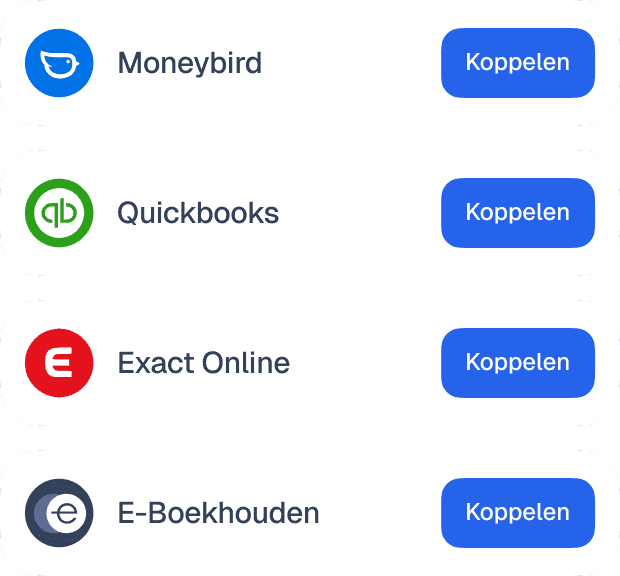
Link your accounting software
Connect GoDutch to your accounting software and automate your admin. Fewer errors, less work, more clarity.


Pay and receive money super fast from your VOF account
With the business VOF account, you can manage all your payments quickly and reliably in one place. From SEPA Instant to direct debit.
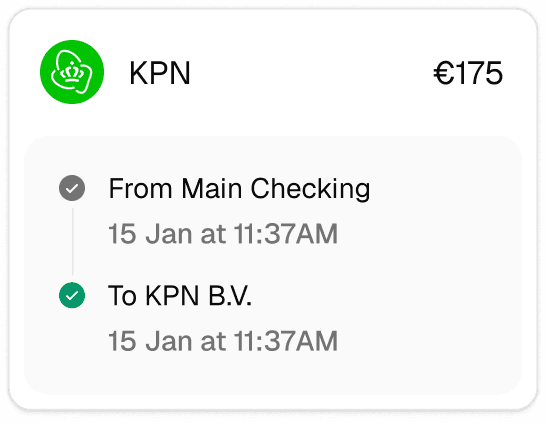
Payments in seconds
Send payments from your VOF account within seconds. No more waiting around; instant transfers ensure your money is in the right account straight away.
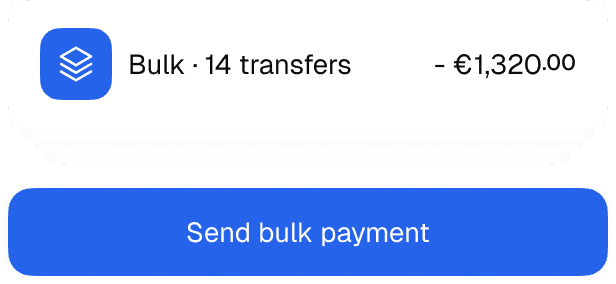
Hundreds of payments at once
Bulk transfers of up to 1,000 transactions per file, ideal for paying suppliers and processing instructions from your accounting software.
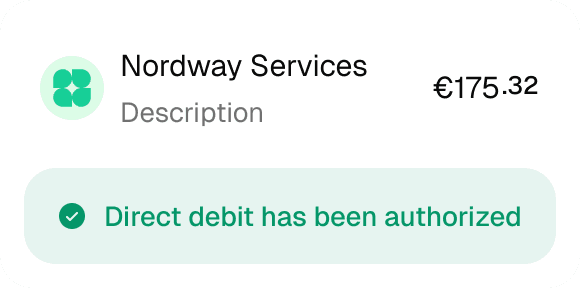
Collect payments automatically from your customers
GoDutch offers support for direct debits, both B2B and Core. Simple and reliable for all your business payments within your VOF.

Is a business account mandatory for a VOF?
A business account is not mandatory for a VOF (general partnership), but in practice it is the standard. A VOF is not a legal entity, and each partner is liable for the debts of the VOF with their personal assets. So you want all partners to see exactly what comes in and goes out.
On top of that, many providers do not allow business use of a personal account. An invoice with the personal IBAN of one partner also does not look like a business with two owners, and makes one partner dependent on the other's account.
How does a VOF account work with different structures?
A VOF account works differently with each structure, because the partners determine who is liable and whom the provider checks as an owner. The VOF is not a legal entity: the business account is in the name of the VOF, but the partners share responsibility for what happens on it.
A VOF with partners as individuals
In a VOF with partners as individuals, each partner is jointly and severally liable for the debts of the VOF with their personal assets. If something goes wrong, a creditor can claim the full amount from one partner.
That is why each partner wants to see exactly what comes in and goes out, and not depend on the partner who keeps the books.
A VOF with a BV as partner
In a VOF with a BV as partner, that BV is liable with its own assets, not the owner personally. Often this is a personal holding company, with its own account for a holding next to the account of the VOF.
When the account is opened, the review team looks through the BV to the people who ultimately stand behind it. So keep the shareholder register of that BV to hand.
What do you need to open a VOF account?
To open a VOF account you need the KVK number of the VOF and a valid passport or driving licence of the partners. The difference from other legal forms is that there is more than one owner. So have these details ready:
KVK number of the VOF: the VOF is registered in the Trade Register, with all partners.
Passport or driving licence: of the partner who applies and of the partner you invite afterwards.
Partnership agreement: not required by law, but a provider may ask for it to see the arrangements between you.
UBO details: for a VOF, these are the partners with more than 25% of the interest or control.
Countries you do business with: only if you also use the account for payments abroad.
How do you open a business account for your VOF together?
You open a business account for your VOF together by having one partner start the application and then invite the other. The account is in the name of the VOF, not in the name of either of you. It takes four steps:
Start the application: one of the partners fills in the details of the VOF and verifies their identity with a passport or driving licence via the camera.
Have the details checked: the review team checks the VOF and the partners and gets in touch if anything is missing.
Invite your partner: the second partner receives an invitation and their own login.
Set up the account: you each request a card, create pots for tax and connect your accounting software.
What do you agree with your partner about the VOF account?
For the VOF account, you agree with your partner who makes which payments and when you consult each other first. Both having full access only works if it is clear what you expect from each other, especially since you are both liable. At least record these points, ideally in the partnership agreement as well:
Threshold for consultation: above what amount do you talk before a payment is made?
Fixed costs: who makes sure rent, subscriptions and insurance are paid on time?
Profit split: in what ratio do you divide the profit of the VOF?
Personal withdrawals: when and how much does each of you take from the VOF to your own account?
Give every personal withdrawal a description with the name of the partner. That way your accountant can track per partner what has been withdrawn and how much profit is still outstanding.
How do you set aside tax on your VOF's account?
You set aside tax on your VOF's account with separate pots, because the VOF and the partners each pay their own tax. The VOF files the VAT return, while income tax is handled per partner. By setting both aside, you know what is really free to spend.
VAT on the VOF's turnover
The VAT on the VOF's turnover belongs to the VOF itself, because the VOF files the VAT return. The money for that return therefore sits in a pot within the VOF's account, not in the personal account of one of the partners.
Incoming amounts are split automatically, so the VAT share is already set aside before either of you can spend it.
Income tax per partner
Each partner pays income tax on their own share of the profit, because the VOF is not liable for that tax.
So create a pot per partner, so that everyone builds up a reserve in line with the profit split. If a partner is a BV, that BV pays corporate income tax on its share of the profit.
What do you arrange on the VOF account when partners change?
When partners change, you first report the change to the KVK and then adjust access to the VOF account. That way the account always matches who is a partner according to the Trade Register. How you do this depends on which way the change goes.
A partner joins
You invite a new partner as soon as the change has been registered with the KVK. They verify their identity, get their own login and card, and from then on see the same transactions as the other partners.
Also adjust the arrangements on profit split and the income tax pots to the new ratio.
A partner leaves
A partner who leaves loses their access at the moment they leave the VOF. Don't delay this, and also block or remove their card, because they do remain liable for debts incurred before they left.
If one partner remains, the VOF ceases to exist and the business continues as a sole proprietorship. The account must then match that new legal form, such as a business account for a sole proprietorship.
What does a business account for your VOF at GoDutch mean?
A business account for your VOF at GoDutch means you work as equal partners from one app: each with your own login and card, on one account in the name of the VOF. Arrangements on payments, pots for VAT and income tax, and changes of partners are handled in the same place. If you run into anything, for example when adding a new partner, real people help you 24/7.
FAQ
Frequently asked questions about the business account for your general partnership
Whether you want to know how shared access works, what a VOF account costs, or how to get started with your partners: you’ll find the answers here.