Open a business account with BKR registration


Opening a business account with a BKR registration in your name: it is a situation that many entrepreneurs face, but there is also much ambiguity surrounding it. Especially if you have just set up a sole proprietorship, partnership, or limited company and quickly need a business account to start your operations, a negative credit registration can lead to unpleasant surprises.
Is it actually allowed? What options do you have? And what can you do to increase your chances? In this article, you will find a clear overview of everything you need to know.
What is a BKR registration?
The Credit Registration Bureau, better known as the BKR, is an independent foundation that keeps track of credit information about consumers. When you take out a loan, mortgage, overdraft, credit card limit, or phone subscription on instalment, this is registered in the BKR system. As long as you meet your payment obligations, there is a neutral registration. However, once your payments are structurally late, you have a payment arrears, or your debt is handed over to a collection agency, this is marked as a negative BKR coding and can have consequences for a business current account.
You do not just get a negative BKR registration. It typically involves situations where there are payment arrears of 120 days or more, a debt restructuring, or a situation where a lender has terminated the loan. This can include overdue repayments on a personal loan, a revolving credit that was no longer maintained, or a phone subscription where the monthly payments were no longer made. Once such a registration is created, it remains visible to financial institutions that consult the BKR when applying.
Can you open a business account with a negative BKR?
In most cases, traditional financial institutions will reject your application for a business bank account if there is a negative BKR registration under your name. This certainly applies to the major Dutch banks, which standardly perform a BKR check when opening a business account. Therefore, you should always compare multiple business accounts with each other. The main reasons for a rejection are:
Increased financial risk: a negative BKR coding signals that you have had trouble meeting payment obligations in the past. Financial institutions consider this as an increased risk of default.
Compliance and acceptance policy: banks and payment institutions are legally required to assess the risk profile of new applicants. A negative credit score often automatically leads to a rejection based on internal policy.
Potential payment issues with business obligations: an institution wants assurance that you as a business owner can also meet your business financial obligations. A previous payment default raises doubts about that capacity.
Reputation and liability risk: allowing users with a poor credit history can have both financial and legal consequences for an institution, especially in the context of the Money Laundering and Terrorist Financing Prevention Act (Wwft).
Amount of registered debt: the higher the outstanding amount that is registered, the greater the chance of a rejection. A small registration is sometimes assessed differently than a large outstanding claim.
Conditions for opening a business account with a BKR registration
Not every application is automatically rejected. The assessment varies by institution and also depends on the nature and extent of the BKR registration, how old the registration is, and whether the debt has since been repaid. Some providers of one or multiple business accounts look beyond just the BKR report and take multiple factors into account. However, most institutions that wish to consider an application with a BKR registration set the following conditions:
The debt has been fully repaid: if you have repaid the registered debt and this is verifiable, some providers are open to reconsidering your application.
The registration is old enough: a BKR registration remains visible for five years after the end of the credit agreement. The older the registration, the less weight it usually carries.
There is a positive business reputation: if you provide a verifiable business history, income, or positive business references, this can work in your favour.
No outstanding debts or payment arrears: providers want to ensure that there are currently no new arrears with other lenders.
Willingness for additional verification: some institutions request additional documentation in the case of a BKR registration, such as a bank statement, tax return, or a Chamber of Commerce extract of your business.
Why is a BKR check conducted when opening a business account?
Checking the BKR registration when applying for a business payment account is all about assessing financial risk. A negative registration is usually the result of a situation where someone has consistently struggled to pay off debts or financial obligations. Think of a personal loan that went unpaid for too long, an ongoing credit that fell into arrears, or even smaller obligations such as a phone subscription that was no longer paid. In all these cases, it involves situations where someone previously had too little financial room to meet their payment obligations.
Financial institutions want to prevent this situation from recurring in a business context. An entrepreneur who couldn't keep up with their personal debts also runs an increased risk of problems with business payments, such as being unable to pay invoices, taxes, or salaries. Additionally, the amount registered plays a role. Someone with a small registration of, for example, a few hundred euros is typically assessed differently than someone with a registration of several thousand euros. The context and underlying story are sometimes taken into account during an individual assessment of the application, but this is highly dependent on the acceptance policy of the respective institution.
Repaying to obtain a business account with BKR registration
It is good to know that there are not always large, complex debts involved. In many cases, it concerns relatively small registrations that have arisen due to a forgotten payment on a phone subscription, a late repayment on a small loan, or a forgotten payment arrears with an energy supplier. The following steps can help you improve your BKR situation and increase your chances of obtaining a business bank account:
Check your BKR report: via the BKR website you can request free access to your own data. This way you know exactly which registrations are in your name and what their status is.
Pay off outstanding debts as soon as possible: once a registered debt is fully repaid, the coding in the BKR system changes. Although the registration itself remains visible, a repaid status presents a much more positive image when applying.
Contact the creditor: with small arrears, it is often possible to reach a payment arrangement with the creditor. Sometimes this can even lead to a registration being adjusted or removed at your request if the debt is fully paid off.
Check for errors in the BKR register: it happens that registrations are incorrect or contain outdated information. If you discover an error, you have the legal right to object and demand correction.
Consider an alternative provider: not all providers of business bank accounts have the same acceptance criteria. Some fintech companies and neobanks look beyond just the BKR and also offer options in the case of a registration.
Apply for a business account with BKR under the basic account covenant.
A common mistake is the thought that as an entrepreneur with a BKR registration, you can invoke the Basic Account Covenant. This covenant offers consumers with a negative credit registration the right to a basic payment account for personal use, enabling them to participate in payment transactions. It sounds like a safety net that would also be available for entrepreneurs, but that is emphatically not the case.
The Basic Account Covenant applies exclusively to personal payment accounts for private use. There is no comparable legal safety net for new business accounts or additional business accounts. This means that as an entrepreneur, even if you invoke this covenant, you have no legal grounds to demand access if your application for a business payment account is rejected. The business market is entirely outside the protection framework of this covenant, and a rejection cannot fundamentally be enforced by the provider through this route. It is therefore wise not to base your application strategy on the idea that this covenant provides a safety net for business use.
How can I open a business account with BKR?
There are concrete steps you can take to improve your situation and still open a business bank account, even with an existing BKR registration. It begins with gaining insight into your own situation and subsequently taking more targeted action. The following steps provide a good starting point:
Request access to your BKR record: check which registrations are in your name and whether the information is accurate and up to date.
Pay off outstanding debts: pay off registered debts as quickly as possible to improve your profile and obtain a more positive status in the BKR system.
Object to incorrect registrations: if a registration is incorrect, submit a request for correction to the BKR or the relevant lender.
Compare providers of business accounts: look for providers that have a more flexible acceptance process and do not solely evaluate based on BKR.
Prepare your application thoroughly: ensure you have up-to-date documentation of your business, such as a Chamber of Commerce extract, bank statements and a possible explanation of the registration.
Simply open your business account with GoDutch?
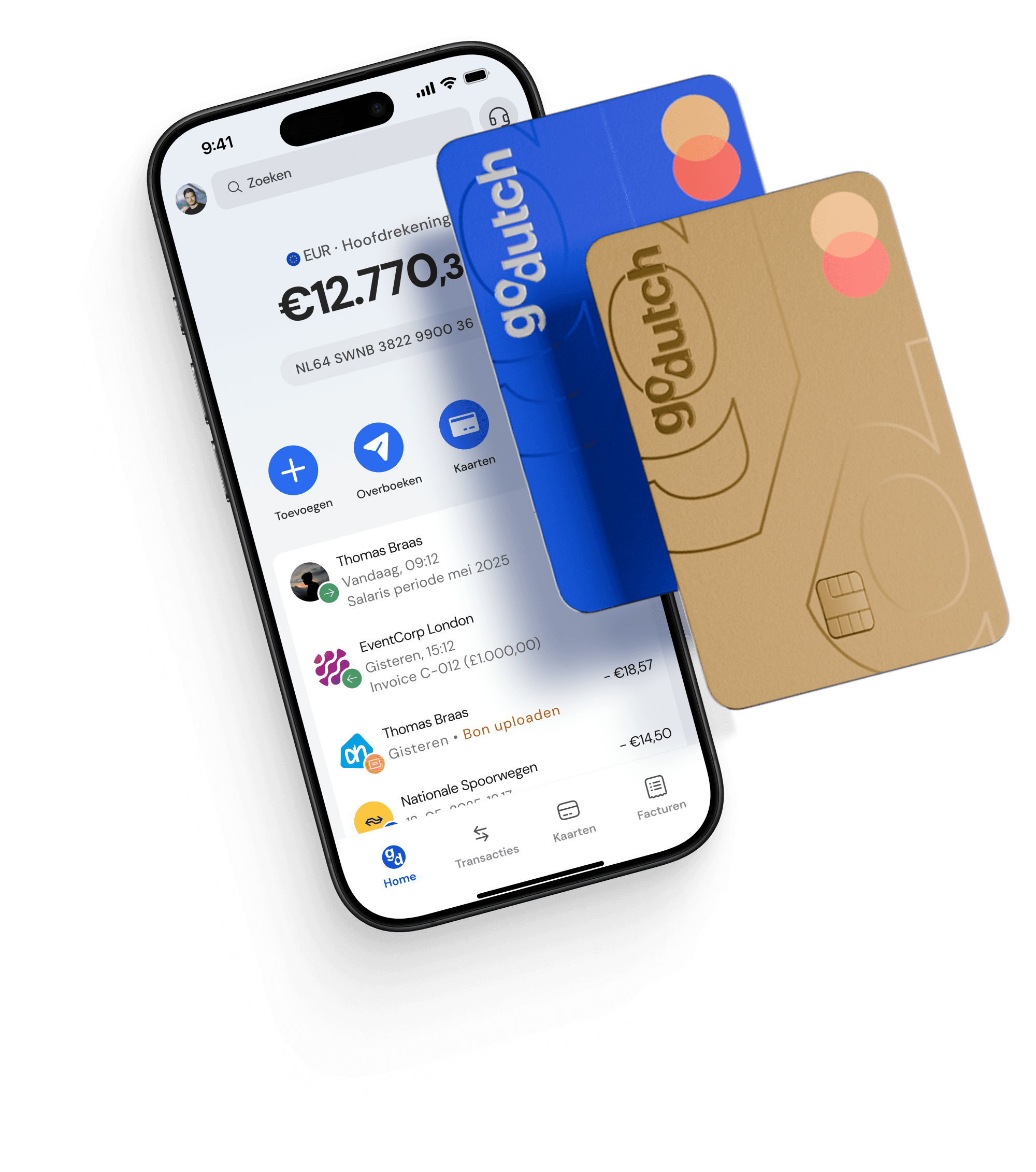
GoDutch is the all-in-one business current account specifically designed for entrepreneurs who want to get started quickly and without hassle. In almost all cases a business account is required for companies. Within five minutes you can create an account, and you will receive your IBAN and GoDutch Mastercard within three hours. No waiting times, no unnecessary paperwork, and a personal KYC team that reviews your application carefully and fairly.
With GoDutch you have everything you need for your day-to-day finances in one clear app: instant SEPA payments, direct debit, cheap money transfers to more than 160 countries, and unlimited cashback on all card spending. You can easily invite your team, create extra payment cards and link your GoDutch account directly to your accounting software. More than 15,000 entrepreneurs have already gone before you. Open the best business account in the Netherlands with GoDutch today and discover what smart business payments look like.
FAQ
Frequently asked questions about opening a business account with BKR
Can I open a business account with a credit registration?
That depends on the provider and the nature of your registration. Traditional banks usually reject applications with a negative BKR coding in most cases. Alternative providers and fintech companies sometimes have a broader acceptance policy and assess your application based on multiple factors. Therefore, it is certainly worth comparing different providers and inquiring about their specific conditions.
Which provider accepts a business account with BKR?
There are several fintech companies and alternative providers active in the Netherlands that offer business payment accounts with a more lenient acceptance policy than traditional banks. GoDutch is one of the providers that offers business accounts and evaluates applications based on multiple factors. The exact acceptance criteria may vary from case to case; please contact the provider of your choice for more information about your specific situation.
What can I do if my bank refuses to open a business account with BKR?
If a traditional bank rejects your application due to a BKR registration, there are several options. First, you can check your BKR report for errors and lodge an objection if necessary. Second, you can pay off the registered debts to improve your profile. Third, it is wise to explore alternative providers that have a more flexible assessment procedure. The Covenant basic account does not provide a safety net for business accounts, so it is important to actively search for a suitable solution.
How long does a BKR registration remain visible to open a business account?
A BKR registration remains visible for five years after the underlying credit agreement has ended. This applies to both positive and negative registrations. After this period, the registration is automatically removed from the system. Please note that the registration may still be visible to providers conducting a BKR check during an application for these five years, even if the debt has since been fully repaid.