What is a bank?


A bank is a financial institution that manages money and plays a central role in the economy. You can keep your money safe there, make payments, save, or use financial services that help you manage your assets in an organised way. Banks form an indispensable link between individuals, businesses and governments by enabling money flows and bringing liquidity into the market.
At its core, a bank is about managing money: receiving, holding and lending funds. By providing loans and credit, money keeps moving and the economy can continue to grow. When you deposit money into your account, the bank uses part of it to finance other customers through, for example, mortgages or business loans. In this way, the bank brings savers and borrowers together and contributes to a stable financial system.
A bank therefore offers not only a safe place for your money, but also convenience, reliability and access to modern payment solutions. Thanks to digital technology, you can nowadays transfer money, pay invoices or do business internationally within seconds. In doing so, a bank supports you as an entrepreneur or private individual in managing your finances efficiently.
How does a bank work?
A bank receives money from customers and uses that money to finance other customers through loans or mortgages. You receive interest on your savings, while borrowers pay interest on their loan. That difference in interest forms the core of banks' business model and keeps the financial system moving. This keeps money productive and allows people and businesses to invest without having to dip into their entire savings.
In addition, banks ensure that the payment system runs smoothly. Whether you pay an invoice, receive a salary or transfer money abroad, the bank ensures a secure and swift processing of every transaction. Banks are also subject to strict supervision by financial authorities, so that your money remains well protected and confidence in the system is safeguarded.
Modern banks combine these functions with digital innovations. Through apps and online banking, you can view your balance, make payments or link your records to accounting software at any time. That makes money management easier, faster and more secure than ever.
The 3 main functions of a bank
A bank performs several core tasks that together ensure a stable financial system. The three most important functions are keeping money safe, providing loans and facilitating payments. Through these functions, a bank supports individuals and business owners in their day-to-day financial activities and contributes to a healthy economy.
Safeguarding and managing money
A bank offers a safe place to keep your money, so it is protected against loss or theft. You can manage your balance via a current or savings account and always have access to your money when you need it. In addition, modern banks offer handy tools such as mobile apps, automatic transfers and links with accounting software, giving you constant insight into your financial situation.
Lending money (loans and mortgages)
A bank provides loans to customers who want to invest, buy a home or expand their business. You pay interest on the borrowed amount, which is an important source of income for the bank. At the same time, the bank makes it possible for others to gain access to capital they would not otherwise have. In this way, the bank stimulates entrepreneurship, housebuilding and economic growth.
Facilitating payments
A bank makes payments possible between individuals, businesses and governments. Via payment cards, direct debits and online transfers, transactions can be carried out safely and quickly. For business owners, this means you can pay invoices easily, let customers settle their bills and manage cash flows. A well-functioning payments system forms the backbone of the modern economy.
Various types of banks
There are various types of banks, each with their own specialisms and target groups. Whether you want to save, invest or bank for business, there is always a type of bank that suits your financial needs.
Commercial banks
Commercial banks are the best known and focus on both individuals and businesses. They offer accounts, loans, mortgages and payment cards. These banks form the core of everyday payment traffic and are the primary financial partner for most customers.
Savings banks
Savings banks focus on the safe storage of savings and the provision of interest. Although their role has become smaller, savings functions are still important for anyone who wants to build wealth without taking risks.
Investment banks
Investment banks support companies and large organisations in raising capital, mergers, acquisitions and stock market listings. They focus less on consumers, but play a major role in the international financial markets.
Central banks
Central banks, such as De Nederlandsche Bank (DNB) and the European Central Bank (ECB), safeguard financial stability, regulate the money supply and supervise other banks. They form the basis of trust in the monetary system.
Online banks and neobanks
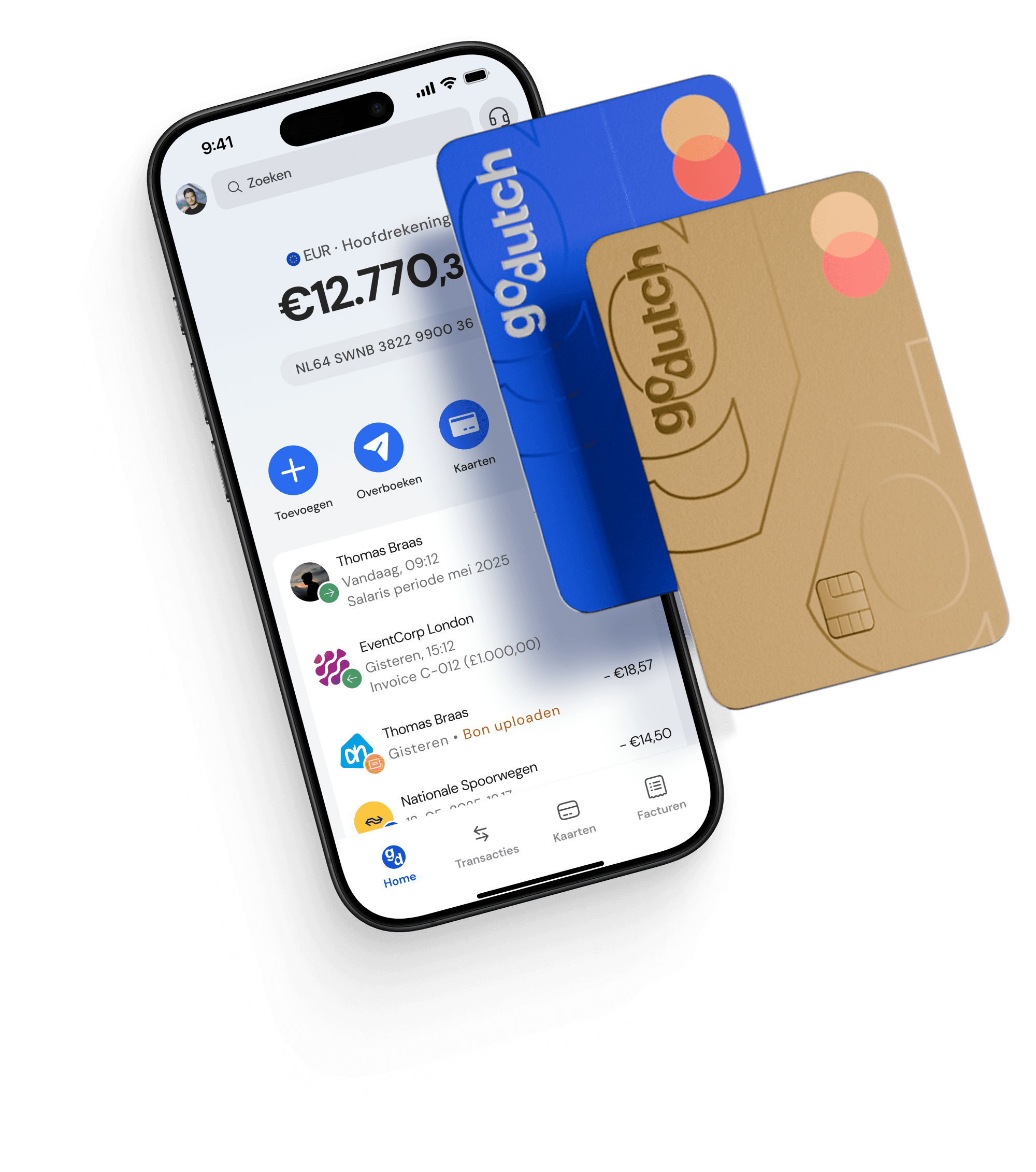
Online banks and neobanks operate entirely digitally and make banking faster and smarter. They have no physical branches and offer innovative features such as real-time payments, automatic administration and links to accounting software. GoDutch is an example of such a modern neobank that helps entrepreneurs save time and money with smart automation and personal service.
What can you do at a bank?
At a bank, you can arrange all your financial matters, from saving and paying to investing and business management. Banks offer a wide range of services that help you keep control of your money and achieve your financial goals.
Open and manage a current account
Deposit, withdraw and transfer money
Save and receive interest
Apply for a loan or mortgage
Make international payments
Online banking via apps or the internet
Integrate with accounting software
FAQ
Frequently asked questions
What is the difference between a bank and a payment institution?
A bank manages savings, provides loans and participates in the financial system. A payment institution focuses solely on processing payments and may not manage savings. Banks therefore offer a broader range of financial services, while payment institutions are limited to transactions.
How do banks make money?
Banks make money through the interest margin between saving and borrowing, transaction fees and extra services such as insurance or investments. Modern providers like GoDutch work with a transparent revenue model without hidden costs, so you always know where you stand.
Can you live without a bank account?
In theory, that is possible, but in practice it is virtually impossible. Most payments, salaries and taxes go through the banking system. For business owners, a business account is even mandatory, because it provides an overview and a clear separation between private and business finances.
What are the largest banks in the Netherlands?
The largest banks in the Netherlands are ING, Rabobank and ABN AMRO. In addition, digital banks such as GoDutch and Bunq are rapidly gaining popularity thanks to their user-friendly apps, low costs and fast service. They offer modern solutions for entrepreneurs who want to simplify their financial processes.