Switching banks


Switching banks is something many entrepreneurs consider but often postpone. This is usually because the process is explained in a complicated way and there is uncertainty about what is involved. Think of direct debits, fixed expenses, payment agreements with suppliers, and informing customers. This makes a switch seem larger and more complex than necessary.
However, changing banks can be a smart business decision. Especially when you, as an entrepreneur, critically examine costs, ease of use, digital functionalities, and support for your business account for a BV, partnership, or sole proprietorship. There are important factors to consider when you want to switch, such as transaction fees, automation options, international payments, connections with accounting software, and the speed at which you can open a new payment account.
Why switch banks?
There are various reasons why people decide to switch banks. Sometimes rising costs play a role, such as monthly fixed charges or transaction fees on, for example, a business account. In other cases, it is about convenience, for example when your current online environment does not match your day-to-day administration or when integrations with your accounting software are missing.
Changing business activities can also be a reason to take another look at your current account. Perhaps you work internationally more often, need multiple current accounts for your team, or want greater insight into cash flow and expense management. By reviewing all aspects of your financial processes, you will quickly discover whether your current provider still suits your ambitions. A switch can then contribute to more efficient handling of finances, lower costs and greater control over your business finances.
Benefits of switching banks
Many entrepreneurs choose to switch banks because the benefits outweigh the effort of the transition. When you critically examine features, service, and cost structure, a new business account can better meet your business needs.
Lower costs: save on monthly subscription fees, transaction costs, and foreign payments.
Better digital environment: a modern app or online platform makes executing payments, managing invoices, and gaining insights into your balance easier.
Faster payments: support for SEPA and instant payments ensures better cash flow.
More automation: integrations with accounting software and direct debits reduce manual work.
Extra functionalities: think multiple payment cards, user rights for your team, and comprehensive reports.
Improved service: quick support via chat, email, or phone builds confidence for inquiries about your account.
How does switching banks work?
When you want to switch banks, there's more to it than just choosing the cheapest payment account. You need to consider ongoing payments, direct debits, periodic transfers, and payment agreements with customers and suppliers. Additionally, it’s important to check what contractual obligations you have with your current provider.
The process varies by bank, but generally, it usually follows the same principle. You first open a new account, map your payment traffic, and ensure that all incoming and outgoing transactions are converted. Then, you check during a transition period whether everything is processed correctly. Only after that do you close the old account. By following this order, you avoid missed payments or administrative errors.
Switching banks: a step-by-step guide
By following a number of fixed steps, you make the switch clear and manageable. With a structured approach, you minimise risks and ensure that your business payment transactions continue to run smoothly.
Step 1: open a new payment account with the new provider
Start by opening a new business payment account. Pay attention to costs, terms, verification procedures, and available features such as direct debit, international transfers, and payment cards. Also check how quickly your IBAN is active and whether there is an identification process via KYC.
Step 2: create an overview of your direct debits
Map all direct debits and recurring payments. Consider rent, subscriptions, insurances, software licenses, and fixed suppliers. A complete overview prevents missed payments during the switch.
Step 3: change your payment account with each entity
Inform customers, suppliers, and other entities about your new account number. Update your IBAN in invoices, quotes, contracts, and your administration. Don’t forget to update your accounting software and any payment links or online payment methods.
Step 4: transfer your balance to your new account
Once you are certain that your new account is fully active, transfer the balance. Temporarily keep a small amount in your old account to catch any outstanding direct debits.
Step 5: check for 1 to 2 months to ensure all payments are going well
For one to two months, check all incoming and outgoing transactions. Watch for error messages, rejected direct debits, and discrepancies in your statements. This check period provides certainty that your payment transactions have been correctly transferred.
Step 6: cancel your old account once everything is running smoothly
Once you have confirmed that all payments are going through your new account, you can cancel your old payment account. Ensure in advance that there are no outstanding obligations or fees associated with the termination.
Switching banks: switch service
Almost every bank offers a switching service that helps you with transferring your payment traffic. This service can significantly simplify the process and prevent administrative errors.
Automatic conversion of direct debits: ongoing direct debits are automatically forwarded to your new account.
Forwarding of credits: incoming payments to your old account are temporarily forwarded.
Less chance of errors: you reduce the risk of missed or declined payments.
Time saving: you do not have to manually inform every contact.
Switching banks with number retention
Number retention means that you can take your existing account number to another provider. In the Netherlands, this is usually not possible for business accounts, including partnerships and small and medium-sized enterprises, because the IBAN is linked to the relevant bank. Therefore, when switching, you typically receive a new account number.
Number retention can be particularly relevant for entrepreneurs with many fixed payment relationships. When it is available, it can limit administrative adjustments. In practice, it is often not a decisive factor, as informing relationships about a new IBAN can be well organised with the right communication.
Would you like to switch banks for business purposes?
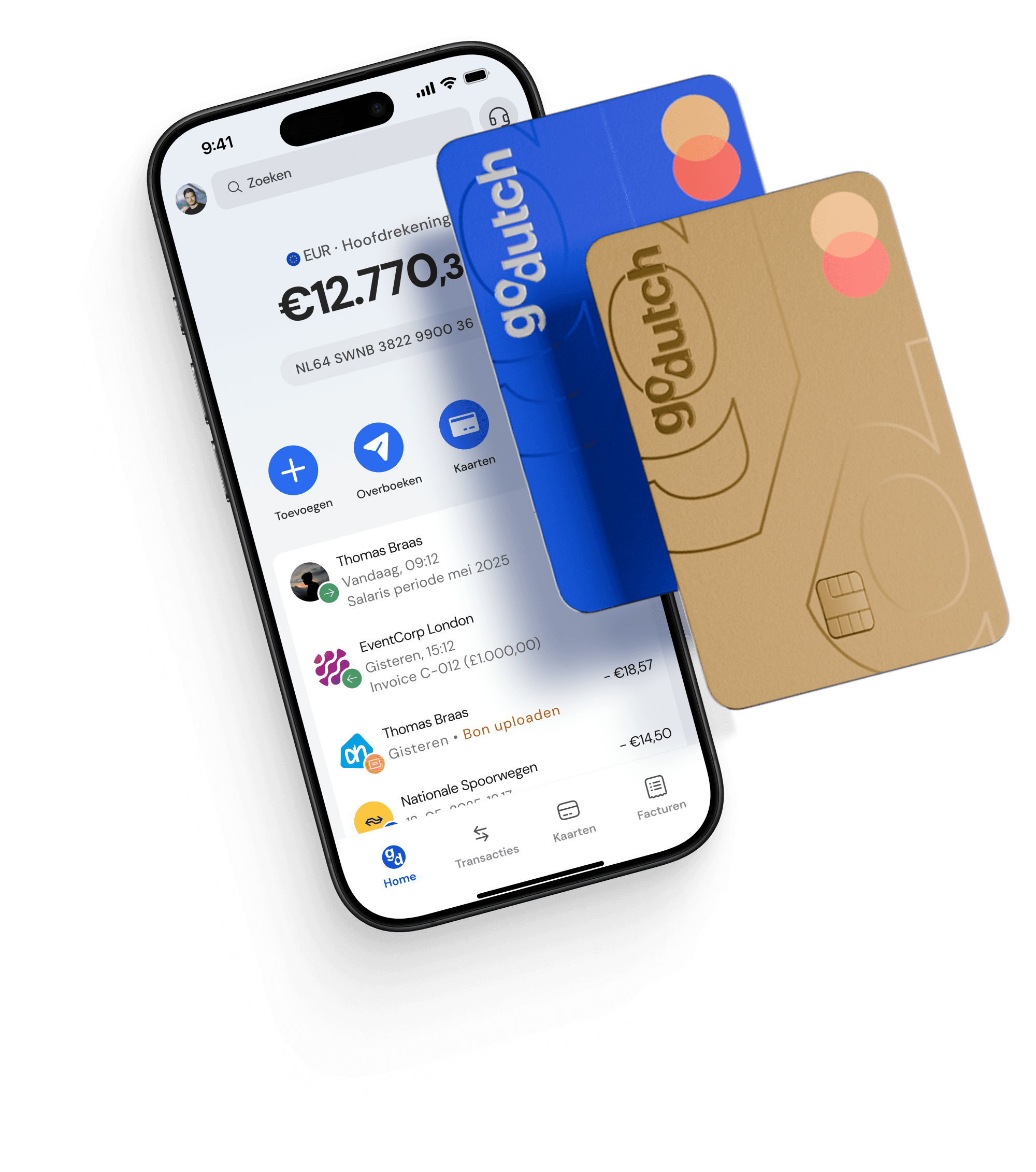
When you want to switch to a business account, it is important to compare business payment accounts and choose a solution that goes beyond just making payments. GoDutch is an innovative all-in-one business account that helps entrepreneurs save time and money by smartly automating administration, payments, and collaboration in one user-friendly platform.
You can open an account in just a few minutes and benefit from fast processing. After completing the application, you will receive an IBAN and card in a short time, and you can start paying immediately and invite your team. You can also easily open extra business accounts through the platform. GoDutch is fully focused on entrepreneurs who need speed, transparency, and smart automation.
Open a GoDutch business payment account
With a GoDutch business payment account, you combine ease of use with comprehensive features. You manage your finances centrally in the GoDutch app and maintain control over your administration.
Fast registration: you open your account in 3 minutes and quickly receive your IBAN.
Unlimited cashback: depending on your package, you receive cashback on your card spending.
Instant SEPA payments: quickly transfer money to other IBANs within Europe.
Integration with accounting software: automate your administration and save time.
Team features: give your team access and easily manage payment cards from the app.
Switching from a bank to a business current account with GoDutch
If you want to switch to a modern business account focused on automation, insight, and rewards on your spending, then GoDutch is a logical step. You can create your business account in about 3 minutes via the online application and go through a short identification procedure. The KYC team processes your application quickly, after which your IBAN becomes active and you can start paying immediately.
From that moment on, you benefit from smart features such as direct debit support, international transfers, multiple payment cards via Mastercard, and cashback on your spending, depending on your chosen package.
FAQ
Frequently asked questions about switching banks
How does switching banks work?
Switching banks involves first opening a new current account, then transferring your payment transactions, and only if everything is running smoothly, cancelling your old account. You map out your direct debits, regular transfers, and fixed payment agreements, change your IBAN with customers and suppliers, and check for one to two months whether all transactions proceed correctly.
Is it wise to switch banks?
Switching banks is advisable when your current provider no longer meets your business needs or when you can save on costs and time. Think of lower transaction fees, better digital features, faster payments, or more extensive automation and accounting integration options.
What mistakes should I avoid when switching banks?
The main mistakes when switching banks are forgetting about direct debits, cancelling your old account too early, and not informing customers and suppliers. Always ensure you have a complete overview of your payment transactions, keep a temporary balance in your old account, and check for at least one month that all payments are processed correctly.
How long does it take to switch banks?
Switching banks takes an average of several weeks, depending on how complex your payment traffic is. Opening a new account can often be arranged within a few days, but the control period of one to two months is important to ensure that all direct debits and credits are processed correctly.
What is the difference between switching privately and switching for business?
The difference between switching from private to business mainly lies in the complexity of payment transactions and administrative obligations. In a business switch, you usually deal with multiple direct debits, suppliers, customers, accounting software, and tax administration. Additionally, legal form, contractual agreements, and any team access to the account play a role, making the switch more careful and extensive than with a personal account.
Can a bank refuse a switch?
A bank can refuse a switch if you do not meet the acceptance criteria or if risks are identified during the identification procedure. This can occur, for example, with incomplete documentation, unclear business activities, or when the risk profile does not fit within the policy.