
The business account for your BV that works with you
Everything your BV needs to easily manage payments, cards and expenses. All in one place.
Private limited company account within 1 day
In 3 minutes you can open a business account for your BV, and within 1 day you can send and receive payments.
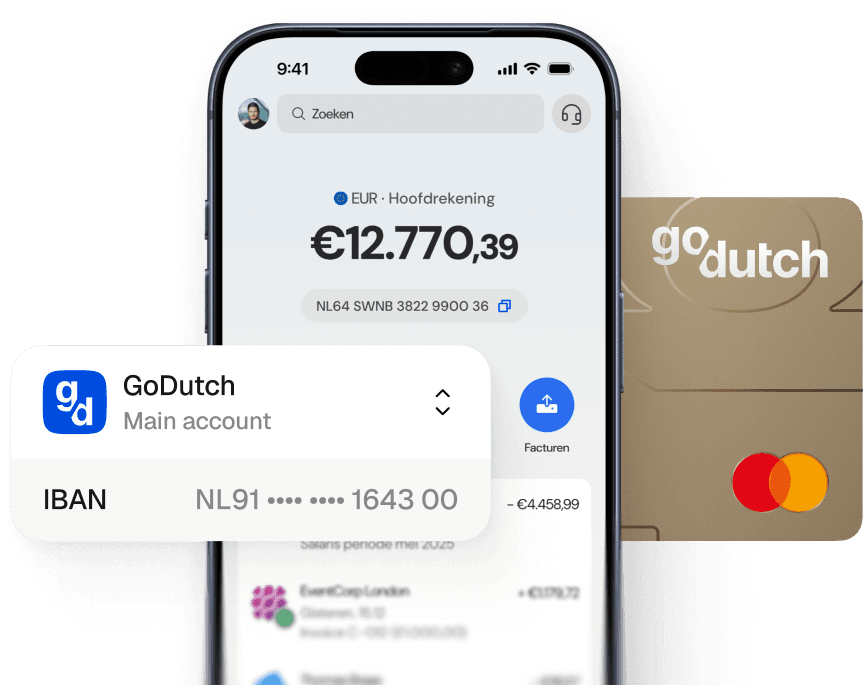
Let your account do the work
GoDutch automates your financial administration, from incoming invoices to expense management. You focus on doing business, we take care of the rest.
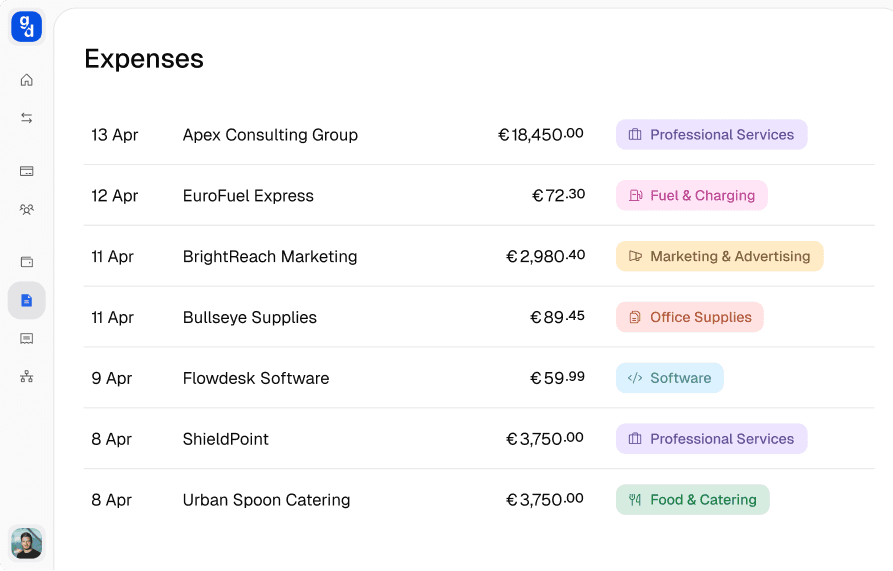
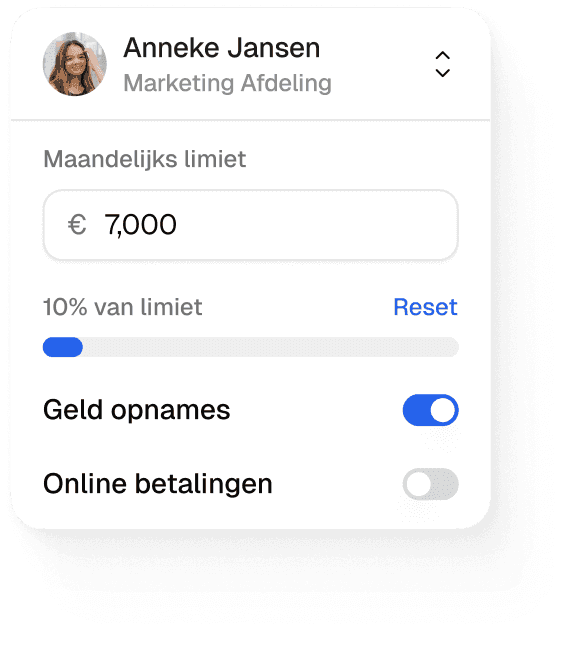
Give employees freedom without losing control
Issue cards to colleagues from your business account and keep control over spending, without the hassle of expense claims.
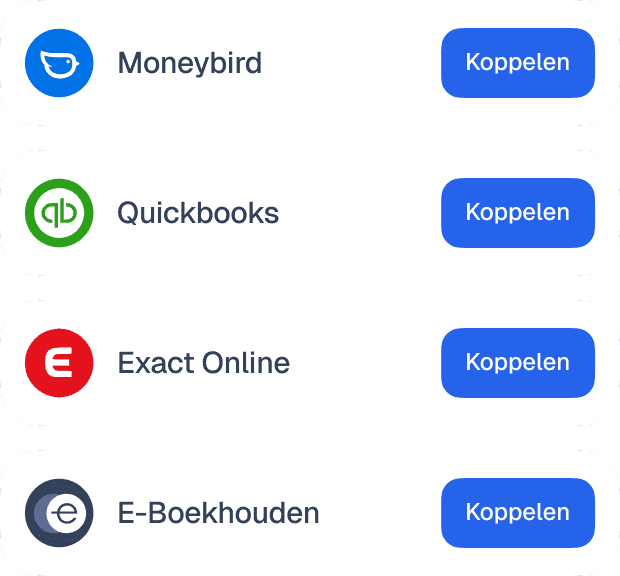
Link your accounting software
Connect GoDutch to your accounting software and automate your admin. Fewer errors, less work, more clarity.


Super-fast payments and transfers from your private limited company (BV) bank account
With SEPA Instant, you can quickly and reliably manage all your payments, including bulk payments and direct debits, in one place.
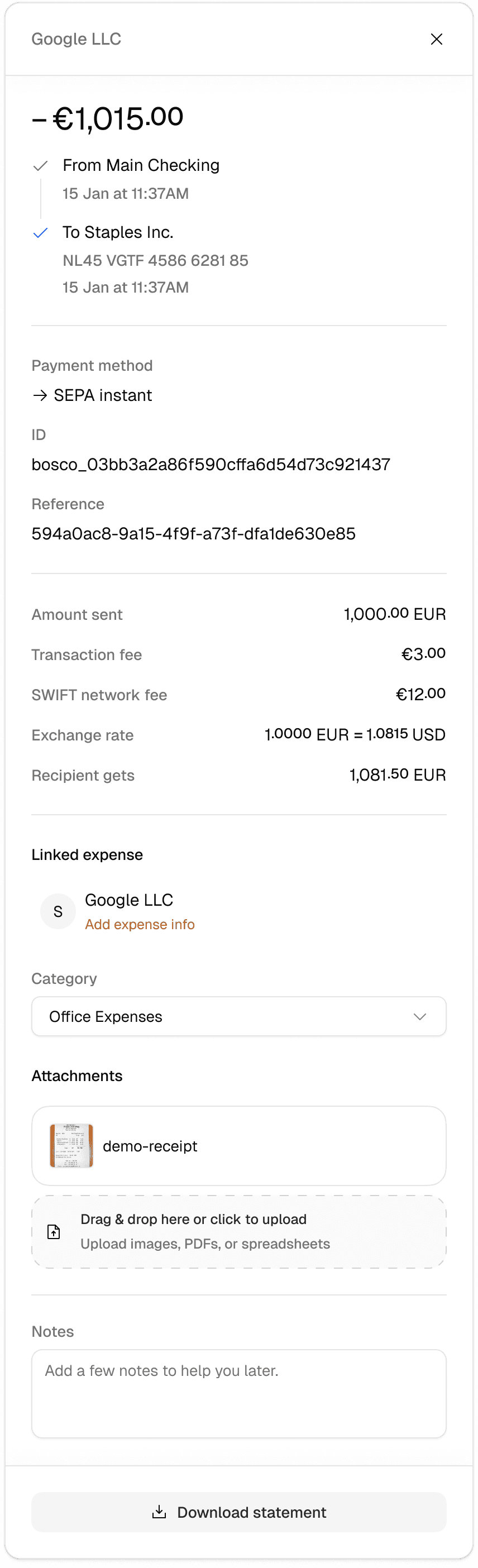
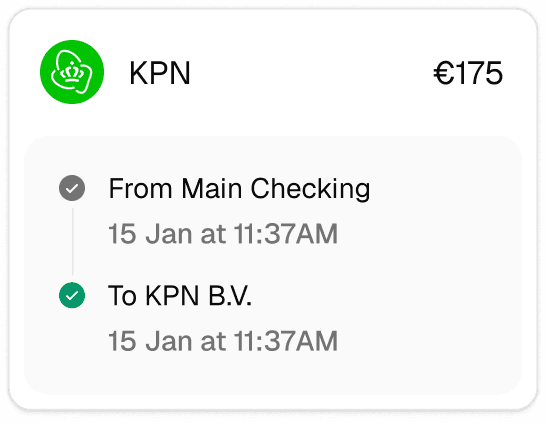
Payments in seconds
With GoDutch, your payments are transferred in a matter of seconds. No more waiting times, instant transfers ensure that your money is directly in the right account.
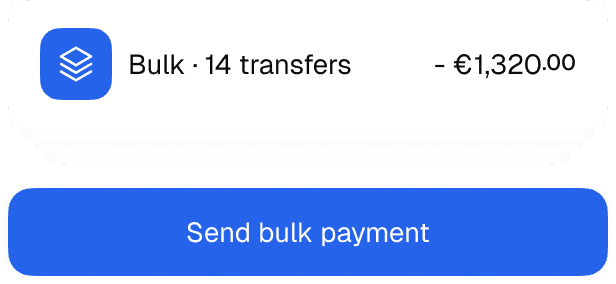
Hundreds of payments at once
Bulk transfers of up to 1,000 transactions per file, ideal for paying out salaries from your BV and processing orders from your accounting software.
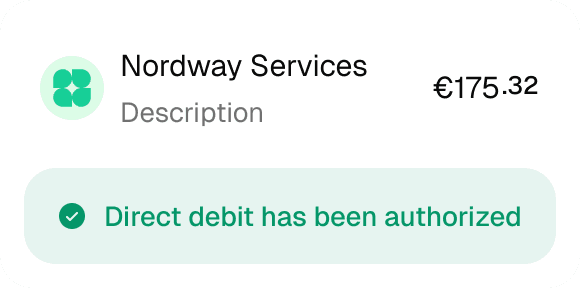
Collect payments automatically from your customers
GoDutch supports automatic direct debits, both B2B and Core. Simple, secure and reliable for all your business collections.

Is a business account mandatory for a BV?
Yes, in practice a BV needs its own business account, because a BV is a separate legal entity. The BV's money is not your money, even if you are the only shareholder. Everything the BV receives and pays therefore goes through an account in the BV's name.
This is where a BV differs from a sole proprietorship (eenmanszaak) or VOF (general partnership). For those, a business account is not required by law, although many providers do not allow business use of a personal account.
What should you look for when choosing a business account for your BV?
When choosing a business account for your BV, look mainly at whether the account fits how your BV is structured and who works with the money. An account that works fine for a BV with one owner can start to pinch as soon as a second shareholder or a holding company comes in. So look at these points:
Acceptance of your structure: some accounts are only meant for a BV with one director who also holds all the shares.
Access per person: a co-director and your accountant should each get their own login with their own permissions, instead of one shared login.
Several BVs under one account: with a holding company or several operating companies, you want to switch between accounts without logging in again each time.
Costs per transaction: besides the monthly price, what you pay per transfer or withdrawal counts, especially if your BV makes a lot of payments.
How do you open a business account for your BV?
You open a business account for your BV as soon as the civil-law notary has registered the BV with the KVK (Chamber of Commerce). With the BV's KVK number and your passport or driving licence you apply for the account online, and within 1 day your BV has an IBAN in its own name. Opening it takes four steps:
Have the BV registered: the notary executes the deed of incorporation and registers the BV with the KVK, after which you have the KVK number. It cannot be done earlier, because without registration there is no BV yet to set up the account for.
Start the application: you enter the BV's details, state who the director is and verify your identity with your passport or driving licence, which takes 3 minutes at GoDutch.
Have the details checked: the KYC team checks the BV and the UBOs and contacts you if anything is missing.
Set up the account: once the IBAN is ready, you deposit the first money, invite your co-director or accountant and connect your accounting software.
Apply for the account straight after registration. Your first invoice then goes through the BV's account right away and you won't have anything to correct later.
Which documents do you need for your BV's business account?
For your BV's business account you need the BV's KVK number and the director's passport or driving licence. What makes a BV different from a sole proprietorship are the documents about who owns the BV and who may act on its behalf. So keep these documents to hand:
The BV's KVK number: you get this as soon as the notary has registered the BV in the Trade Register.
Passport or driving licence: of the director making the application; you verify your identity via the camera.
Articles of association: these state who may act on behalf of the BV, and the KYC team can ask for them to check this.
Shareholder register: this shows who owns the shares; the board keeps it up to date from incorporation.
Details of the UBOs: the people who ultimately own or control the company, for a BV in any case everyone with more than 25% of the shares.
What determines how quickly your BV's business account is opened?
How quickly your BV's business account is opened depends mainly on how clear the ownership of the BV is. With one shareholder and details that match the KVK registration, the check is done quickly. Three situations need more looking into.
1. Several shareholders
With several shareholders, it must be clear who holds more than 25% of the shares and so counts as a UBO (ultimate beneficial owner). The shareholder register must also match exactly what you enter in the application. Even a small difference between the two is enough for a follow-up question from the provider.
2. Shareholders or directors abroad
If a shareholder or director lives abroad, a provider may ask for extra details to identify that person. So keep a valid ID and a current address to hand for everyone involved.
3. A holding structure
If your BV's shares are held by a holding company, the UBO sits one layer higher. A provider then looks through the holding to the people who are ultimately behind it. An organisation chart of the structure makes that clear at a glance. For the parent company you also open a separate business account for the holding, kept apart from that of the operating company.
The same applies in all three cases: make sure the details of directors and shareholders at the KVK, in the shareholder register and in your application match. Extra questions are then usually not needed.
How do you keep your BV's money and your personal money separate as a DGA?
As a DGA (director-major shareholder) you keep your BV's money and your personal money separate by running every flow of money between you and the BV as a separate, recognisable transfer. Your salary, a dividend payment or a reimbursement for costs you paid in advance are transferred from the BV's account to your personal account, with a description that tells your accountant what it is.
The same applies the other way round: don't pay personal expenses with the BV's account or card. If you do, you end up owing money to the BV, and your accountant has to sort that out and account for it later.
What is the current account between you and your BV?
The current account (rekening-courant) between you and your BV is not a separate account, but an entry in the BV's books showing what you and the BV owe each other. If you pay something on behalf of the BV, or lend money to your BV or the other way round, it goes on the current account. How to record that relationship properly and where the limits are is explained in the article on the current account of a DGA.
Who may use the business account on behalf of your BV?
The directors use the business account on behalf of your BV, plus the people they give access to. Who is a director and whether they may act alone is set out in the articles of association and the KVK registration. If a director may only act together with another, agree between you who approves which payments. Within the account you work with roles instead of one shared login:
DGA: you manage the account and decide who gets which permissions.
Co-director: a second director gets their own access, so the BV doesn't come to a standstill if one of you is away.
Accountant or tax adviser: views the account with the permissions you set, for example view-only, and so has the figures for the tax returns to hand.
How do you set money aside within your BV for corporate income tax and VAT?
Within your BV you set money aside for corporate income tax (vpb) and VAT with separate pots in your business account. In the paid plans, incoming amounts are split automatically, so the part for the tax return is already set aside before you can spend it.
That way you see at a glance what the BV can really spend, and you won't face surprises with your VAT return or the corporate income tax assessment. You also use a pot for other reserves, such as salaries or a buffer for quiet months.
Why a business account for your BV at GoDutch?
You choose a business account for your BV at GoDutch because you open the account straight after registration and then manage reserves, access for your co-director and accountant and any other BVs in one app. Ready to start? Apply for your BV's business account in 3 minutes.
FAQ
Frequently asked questions about a business account for your BV
Whether you want to know if a business account is mandatory for your BV, what it costs or how quickly you can get started: you will find the answers here.
Can I open the business account before my BV is registered with the KVK?
No, you only open the business account for your BV once the BV is registered with the KVK, because you apply for it with the BV's KVK number. The money you contribute as a shareholder is transferred as soon as the BV's account is ready, unless you agree otherwise with the notary.
Can I take the account of my sole proprietorship with me to my BV?
No, you can't take the account of your sole proprietorship with you to your BV, because the BV is a new legal entity and needs an account in its own name. So you open a new account for the BV and give the new IBAN to customers and suppliers. What else changes is explained under the switch from freelancer to BV.
Are the costs of my BV's business account deductible?
Yes, the costs of your BV's business account are business expenses and so reduce the profit on which the BV pays corporate income tax. This applies to the monthly fee of your plan and to the costs per transaction. Your accountant includes them as ordinary costs in the BV's accounts.
What do you arrange with the account when your BV changes director?
If your BV changes director, you first have the change registered with the KVK and then adjust access to the account. The new director gets their own login and you remove the departing director from the app yourself. The KYC team may ask the new director to verify their identity.
What happens to the business account when you dissolve your BV?
If you dissolve your BV, you still need the business account until everything is settled. Through that account you pay the last bills and taxes and pay out whatever is left to the shareholders. Only when the balance is zero and nothing more is coming in do you close the account.